Green tour Kyoto | travel information in JAPAN » Schedules » June 2011

This month's events
The temples and shrines in Kyoto have been keeping their rituals and events from the olden days.
They are traditional, sacred and a pleasant experience. We'd like to introduce them every month.
They are worth to visit during your stay.
June 2011 Highlight events in Kyoto
June 1st
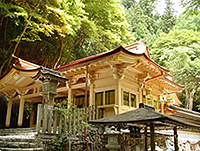
Kibune Shrine Festival
This is a classic ceremony for giving thanks at Kibune Shrine. People carry a mikoshi (portable shrine) along […]
June 1st
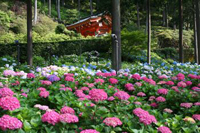
Hydrangea Garden Opening
Mimuroto-ji Temple, called Hydrangea Temple, opens their garden to public until July 11. You can enjoy about 1 […]
June 1st
Kaminari-yoke Festival
This is an annual festival to pray for protection from thunder and fire and also for a rich harvest. The talis […]
June 3th

Heian Shrine Garden Public Opening
This is a good opportunity to see this beautiful Japanese garden of 2,000 blooming “kakitsubata” a […]
June 10th
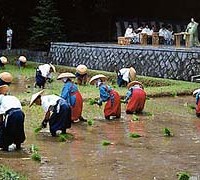
Taue-sai Rice planting Festival
Fushimi-Inari Taisha Shrine enshrines the God for rice harvest. This is an annual event for a rich harvest of […]
June 15th ~ 30th
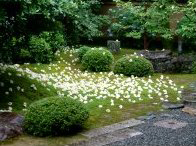
Summer camellia Viewing
Torin-in Temple in Myoshin-ji Temple ground is famous for a garden scene in which a lot of camellias have fall […]
June 18th

Hojo-e event
Hojo-e is a Buddhist event in which living things are set free and the killing of them is remonstrated against […]
June 17th ~ 19th
Antique Grand Market
About 350 antique dealers will display their shops’ booths at this biggest antique event in Western Japa […]
June 20th
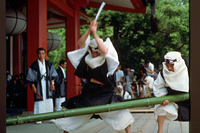
Takekirie Bamboo Cutting Ritual
Kurama-dera Temple, located at the top of sacred Mt. Kurama, holds this historical ritual every June. Two team […]
June 30th
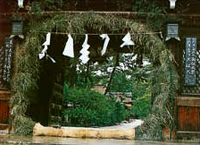
Nagoshi-no-harai Ritual
This is an ancient Japanese purification to pray for our health in the remainder of the year. It is said that […]
- April 2012
- April 2013
- April 2014
- April 2015
- April 2016
- April 2017
- August 2011
- August 2012
- August 2013
- August 2014
- August 2015
- August 2016
- August 2017
- December 2011
- December 2012
- December 2013
- December 2014
- December 2015
- December 2016
- December 2017
- February 2012
- February 2014
- February 2015
- February 2017
- February 2018
- January 2012
- January 2014
- January 2015
- January 2016
- January 2017
- January 2018
- July 2011
- July 2012
- July 2013
- July 2014
- July 2015
- July 2016
- July 2017
- July 2018
- June 2011
- June 2012
- June 2013
- June 2014
- June 2015
- June 2016
- June 2017
- March 2012
- March 2013
- March 2014
- March 2015
- March 2016
- March 2017
- March 2018
- May 2012
- May 2013
- May 2014
- May 2015
- May 2016
- May 2017
- November 2011
- November 2012
- November 2013
- November 2014
- November 2015
- october 2011
- october 2012
- October 2013
- October 2014
- October 2015
- October2016
- September 2011
- September 2012
- September 2013
- September 2014
- September 2015
- September 2016
- September 2017


- Every 1st Sunday
- To-ji Temple
- 7:00-16:00
- Antique market.
- Every 2nd Saturday
- Toyokuni Shrine
- 10:00-15:00
- Small antique market.
- Every 2nd Sunday
- Bishamon-do in Kennin-ji Temple
- 10:00-16:00
- Known as Tora-ichi, artistic handicrafts & arts.
- Every 4th Sunday
- Kamigamo Shrine
- Handicraft market in peaceful and quiet grounds of the shrine.
- Every 15th
- Chion-ji Temple
- 8:00-16:00
- Kyoto's biggest monthly market of handmade goods and crafts.
- Every 21st
- To-ji Temple
- 7:00-16:30
- Known as Kobo-san, Kyoto's largest market for all kinds of antiques, tools and so on.
- Every 25th
- Kitano Tenmangu Shrine
- 7:00-16:30
- Known as Tenjin-san, a popular flea market at one of Kyoto's major shrines. Antiques, food, tools and so on.